Choose Diwa Fun Games – Categories and Controls
For this visit, keep either card tables, one spin lane, or a lighter screen. Not the set of them.
Decide in the notes, not in the grid
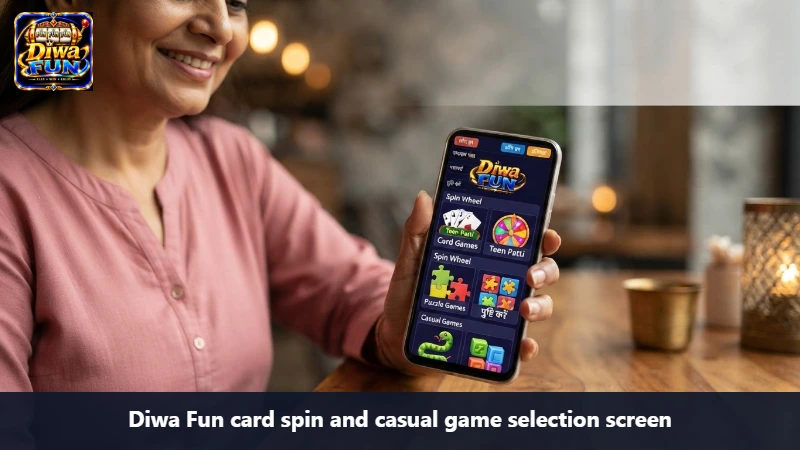
Diwa Fun will lay out more titles than a single visit needs. Choose before you open it. Card tables if you want decisions and you are still fresh. One spin lane if you already hold a small count, because a spin invites another press. A lighter screen if you want something you can leave without a long rule sheet. If none of those sentences fits, do not enter in order to shop.
Shopping the grid is a visit you did not plan. The plan was one name.
See the stake before it is final
On the title you named, find the amount and the moment a round locks. If motion hides either, step back. Learning with money is the expensive way to read a rule.
Time a few rounds with attention first if the screen allows a look, or simply watch one cycle without raising the amount. A fast spin can finish the cash limit while the minutes you wrote down still look generous. Shrink the cash, or leave. Leave automatic play switched off.

Close that title and the visit
At the minute or the count you wrote, exit. A pleasant result is not a voucher for the other category. An unpleasant one is not a reason to open it either. The claim notes do not ask you to wander.
One return to the lobby if the title hangs. Then the games notes are done for this visit.
Decide in the notes, not in the grid
Diwa Fun will lay out more titles than a single visit needs. Choose before you open it. Card tables if you want decisions and you are still fresh. One spin lane if you already hold a small count, because a spin invites another press. A lighter screen if you want something you can leave without a long rule sheet. If none of those sentences fits, do not enter in order to shop.
Shopping the grid is a visit you did not plan. The plan was one name. Write that name. Two names means one must be struck. A speech you cannot follow is feebler than a single choice you honour.
Claim notes do not get a second line on that paper unless that errand is finished and minutes remain. Most visits should not try to finish both. If you cannot name a title, leave the lobby closed. Indecision is a complete result.
Pace and controls before the first stake
On the title you named, find the amount and the moment a round locks. Find how a press starts and how it ends. If motion hides either, step back. Learning with money is the expensive way to read a rule.
Time a few rounds with attention only first if the screen allows a look, or simply watch one cycle without raising the amount. A fast spin can finish the cash limit while the minutes you wrote still look generous. Shrink the cash, or leave. Leave automatic play switched off. A safe lobby visit wants decisions you can remember.
Gentle looking art is not a gentle cost. Multiply stake by finished rounds for the pace you chose. Believe the product. Artwork will argue the other way.
Stay with the pace you named
Switching from cards to a spin because cards felt slow is a second visit glued to the first without new paper. Slow may be the pace that fits your minutes. Boredom is an exit, not a search for a louder screen. The lighter screen is not a reward for enduring cards, and the spin is not a remedy for a dull card game.
Near misses are display. They do not schedule the next ending. When you notice yourself narrating a close call as evidence, the evidence is about your focus, not the spin. Put the phone down.
If the title hangs, one return to the lobby is enough. Then the games notes are done for this visit. Do not turn a freeze into a repair session with extra taps.
Close that title and the visit
At the minute or the count you wrote, exit. A pleasant result is not a voucher for the other category. An unpleasant one is not a reason to open it either. The claim notes do not ask you to wander.
The grid will still list titles you did not open. Unfinished is not failed. Games notes succeed when one title was named and then closed. You do not owe the grid a sample. A sample is another visit disguised as research.
At the end, the words you wrote should be the only title you remember opening. If the memory is a circuit of tiles, the method failed. Nobody here fines you. The next visit starts with blank paper. Do not repair a slip by playing more. Repair means stopping.
Keep the choice deliberately quiet
A quiet visit that kept the plan is a success. Excitement in the artwork is a poor scorecard. Score by whether paper and history agree. Say the title aloud before unlock, and again when you mean to stop. The second saying is the one people skip. They stop when fun ends, which may be after the clock. Fun is not the stopper. The clock is.
Leave other guides closed. Reopening claim or install notes from inside a title turns one choice into a project. Diwa Fun can survive an unfinished project. Your cash edge may not.
Tell friends you will not recommend a tile. A pace that fit your minutes may wreck theirs. Tell them to meet the lobby first and write their own edge. That answer is complete without reopening the lobby to remember art.
When the pace was a mismatch
Ten minutes in, you may learn cards crawl past the time you have, or that a spin spends faster than your note allows, or that the softer-looking title hardens once the stake is visible. The app will let you hop. These notes ask you not to. Close, log the time, stop. The lesson helps tomorrow. Spending it tonight is expensive.
Irritation is a clean signal. People silence it because leaving feels like wasting setup. Setup already finished when the icon appeared. Play stayed optional. A wrong fit is cheap information if you leave at once.
Write one private line about the mismatch. Next visit, if there is one, will need less of this guide. Next visit may also never arrive. Both endings are fine. The menu does not keep a score of adults who left early, and these games notes will not invent one.
Categories as refusal tools, not a checklist
Categories exist so you can refuse two of them quickly. Cards, spin, lighter screen—name one, refuse the rest. A checklist that tries to sample each category is a different plan and needs different paper. Most adults who sample end up revising the cash edge mid-evening. That revision is the failure mode these notes are written to prevent.
Controls matter more than category labels. Find stake, lock moment, exit, and autoplay switch. If any control is hidden behind motion, step back. Labels that say easy do not replace controls you can see. Seeing comes before funding.
After you refuse the other categories, do not peek at them for comparison. Comparison reopens shopping. Shopping is the grid’s favourite sport. The navy desk wants the sport closed for this visit.
Lobby return without a second title
One return to the lobby is allowed if the title hangs. A second title is not. If the hang tempted you toward another tile, that temptation is information about your focus, not about the lobby’s quality. Lock the phone. The games notes end there.
If you still have minutes and a clear single title that matches your paper, you may reopen that same title once. Same title is not same as any title. Any title is how a plan dissolves. Same title keeps the plan intact.
When the clock ends, leave even if the lobby looks inviting. Invitation is the lobby’s job. Leaving is yours. A safe install habit got the icon onto the phone; a safe games habit keeps the visit from becoming a tour. Both habits matter. Tonight only needs the second one if the first already finished.
Controls checklist before funding
Before funding the title you named, confirm four controls: stake amount, lock moment, exit path, and autoplay switch. If any control is missing or hidden behind motion, step back. Funding without those four is learning with money. Learning with money is the expensive classroom these notes refuse.
Watch one cycle without raising the stake if the screen allows it. Timing the cycle against your minutes tells you whether the pace fits. A pace that burns the cash edge in a third of the clock is a mismatch. Leave or shrink before the first real stake.
Refuse automatic play. Automatic play removes the decision points that make a limit usable. A limit without decision points becomes a blur. Blur is how adults say they did not notice the edge passing.
Refuse the tour even when tiles glitter
Glitter is not information. A brighter tile is not a kinder cost. Position on the grid is not a ranking. When the lobby argues with colour, answer with the single word on your paper. If the word no longer fits, stop rather than shopping for a replacement mid-visit.
One return for a hung title is enough. A second title is a new visit that needs new paper. Without new paper, the second title is how plans dissolve. The navy desk wants the plan intact more than it wants the grid explored.
When the clock ends, lock the phone even if a near miss is still animating. Animations are built to feel unfinished. That feeling is not a report. Put the phone down. The games notes have no further station after the clock.
One category, written on paper
Before Diwa Fun opens, write a single word: cards, spin, or lighter. If you write two, cross one out. The games notes are allowed to be that small. A long explanation you cannot act on is weaker than one choice you keep.
The bonus card does not get a word on that note unless you already finished the claim notes and still have time. Most visits should not try to finish both jobs.
At the end, the word you wrote should still be the only title you can remember opening. If you remember a tour, the method slipped. There is no penalty on this site.
There is only the next visit, which starts again with a blank note rather than with the titles you meant to refuse. Tomorrow can have a different answer. Today does not have to finish the lobby.
Questions
No. One title finishes the plan.
No. Read its stake. Light on the eyes is not light on the balance.
Stop. Boredom is an exit, not a search.
No. The notes only keep the choice to a single screen.
The other titles stay listed
They can stay listed. You do not have to clear them. Another visit, if you ever book one, starts with a new choice rather than an unfinished grid.
18+ Safety Notice
Picking a Diwa Fun title is for adults 18 and older. Card tables, a spin, and a lighter screen can all lose. These notes do not foresee which.